Lisa Boehme
When my baby girl was born I discovered she had Down’s Syndrome. My first reason was shock. I never rejected her, but I was stunned by the diagnosis. Then there follows a period of struggle, and finally you surmount the hurdle of acceptance and the mind asks “This is the way it is! Now what can I do?”
Our family loved and cherished Lisa. We did whatever we could for her. She was small and couldn’t hold her head up. Realizing it would be a long uphill journey at 5 months we bought her a baby lounge which supported her head. As months passed we finally bought her a walker and she sat beside me as I worked in the kitchen. When she slumped down and her arms slipped down into the opening where her seat was I would prop her up again and put her arms up in front of her again. After several months she began using her legs, and we also used a Jolly Jumper to strengthen her further.

She finally got so she would move the walker backwards. I recall one day she pulled the books out of a lower shelf and I was excited because she had been so lethargic. I replaced the books and encouraged her “Do it again Lisa!” Another time she backed up to a big Amaryllis plant and the floor and shredded the blossoms. A visiting neighbour girl said “Oh, your mother will be upset she did this.” And my children replied “Our mother will be glad that she did this!” We were all pleased with any action from her.
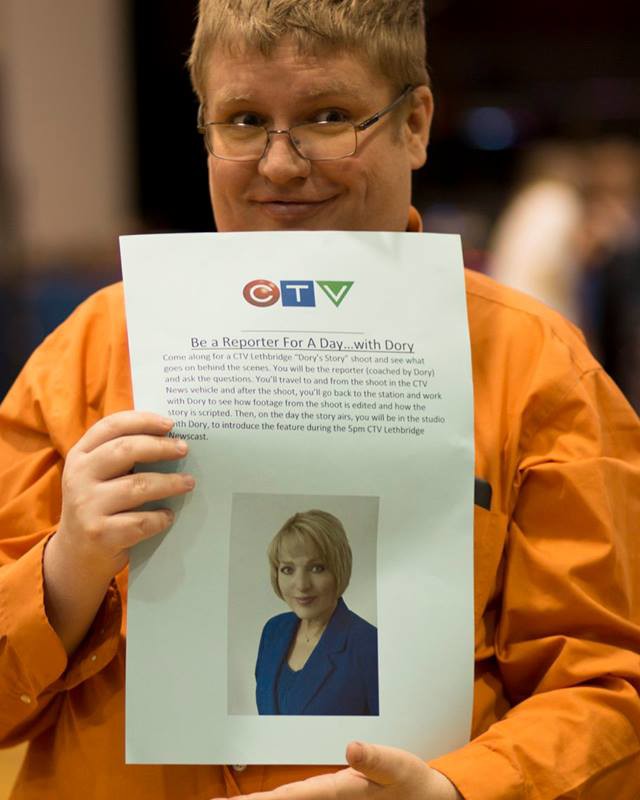
As time went on she started saying a few words. When the CTV logo would appear on TV she would chant “CTV” along with the tune that accompanied it. Some though it was the music that triggered her recognition, but I had noticed that she still did it even when the sound was muted. With this encouragement of her potential I decided that “if she can read CTV she can learn to CAT”. And so when she was 4 years old I started to teach her to read. I had never started at that age with any of our other children but I needed to know if she could.
I got Dr. Glen Doman’s book called “Teaching Your Baby to Read”. I would put a word on paper and tell Lisa what it said and then gradually add another word and change the order of their appearance. Another tool I used was Dorothy Taft Watson’s records, pictures and books on phonics. You didn’t worry about the alphabet, only the sounds. I remember the letter P had a picture of a man smoking a pipe (shaped like a letter P lying down) and it read “Papa’s pipe goes puh-puh-puh”. As Lisa’s papa did not smoke a pipe I used “principal” because the kid’s school principal did use a pipe. For the letter D it showed a drum making a sound duh-duh-duh.
I continued working with these, even making up flash cards and having her read them while we were driving. One day I put “cow” at the top of a list with “hello” then “Daddy” following. I thought it was time for a new word so I started at the top again with the word ‘boy’. She repeated ‘boy’ and the noticed the other words and said “cow” and then made her own connection to say “cow-boy”. I knew it was time to get her a little story book.
I was fortunate to obtain some discarded books from the school; “We Work & Play”, “We Come & Go”, and “We Look & Listen”. I started reading them to her, pointing to the words and having her repeat it back to me. After awhile I could cover the picture and she would still read the word.
Around that time I was asked to let her go to Lethbridge to attend the Dorothy Gooder School but we felt she would benefit most if she were with her family, so I continued teaching her. At one point we let Lisa live with her married sister living in Edmonton so that she could attend the Winifred Stewart school in Edmonton. Her sister approached them to request Lisa be put in a level where the other students could talk so that she could continue to interact with the others.
When they all came home from Edmonton I asked permission to have Lisa in a Special Education class which was being offered in Rosemary school that year. Although it wasn’t really geared for her the teacher told me that Lisa was the sunshine in her class and she was glad to have her there.
The next year that opportunity was offered at the Duchess school, so I drove her there and back every day. The following year it was 40 miles away at Patricia. I felt I just couldn’t handle the drive and so went back to Rosemary and asked if they would let her attend kindergarten in the mornings and Grade 1 in the afternoons, and I would supplement her teaching at home. As well I offered to help in the school in any way I could. Because I had training in Health & Recreation I taught Grades 1, 2, & 3 twice a week with exercises and games.
By Christmas that year, at age 11, the teacher said Lisa was fully on par with Grade 1. In those days many people believed that children with disabilities were un-teachable, which made Lisa’s progress even more amazing. The next year that same teacher, Mrs. Alda Gibb, suggested that we let her stay with the class she has been with and move on to Grade 2. Everyone was so cooperative in supporting Lisa’s participation.
The Grade 2 teacher at first was afraid when he heard that he was to have a student with Down’s Syndrome but he got to the point that he was very pleased with what she could do in a one-on-one situation and wished he could spend more time with her. “No”, I said, “She gets only 1/17 of your time (just like everyone else) and I will do the rest at home”. This situation continued well through Grade 3.
Then another opportunity came along as the Rosemary school developed a program to offer shop, cooking and life skills in addition to the academic classes. By that time we were moving to Lethbridge and although it was hard to leave all of the wonderful people and resources that had supported Lisa through her years at Rosemary, Lisa was happy to attend the Special Education classes at Winston Churchill School.
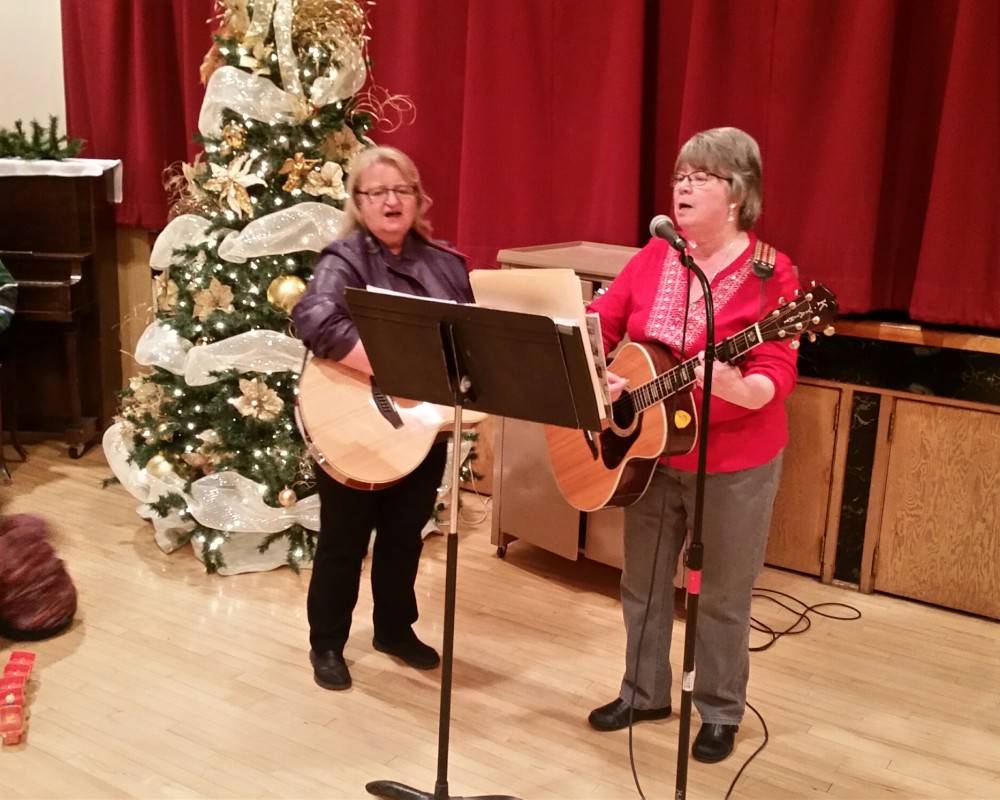
The fact that Lisa could read opened up experiences that many children with disabilities might not get to try. We bought a musical instrument called an Omnichord. The buttons were labelled Bc, C, G, and so on. I would print out the words to familiar songs and above the appropriate word with red crayon I printed the accompanying musical notes. She would sit there and press the button and stroke the sensor strip and out would come a beautiful arpeggio (a broken chord). She really loved being able to do that on her own and became quite good at it. It was really a heavenly outlet for her natural love of music.
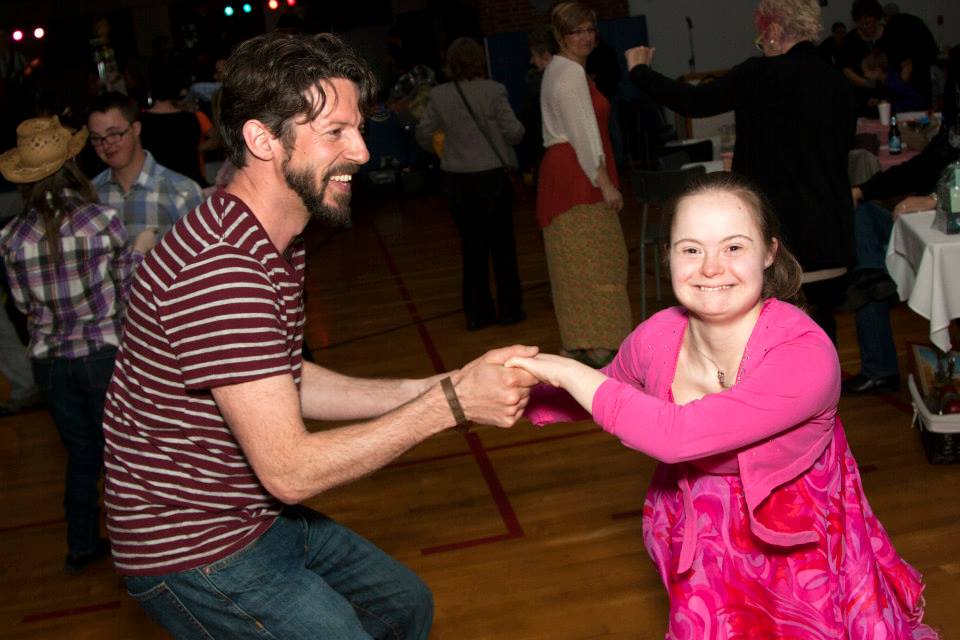
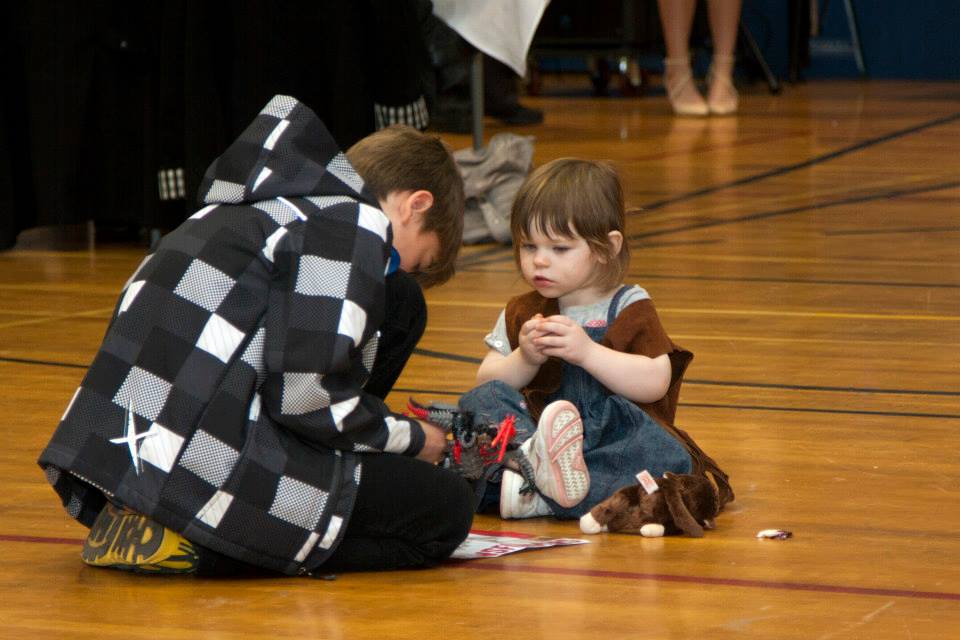
Also, she helped to look after her little nieces and nephews and read stories to them. This gave her much purpose and fulfillment in life. In temperament she was so loving and funny. When she turned 20 she said to me “I not a teenager anymore… I give you no more trouble!”
Lisa lived to be 34. I will always be grateful for the privilege of having her in our family, and I deeply appreciate all those over the years who were so cooperative, helpful, kind and accepting of her.
|